
I wasn’t always a mindful eater.
As a kid and teenager, I was quite compulsive and often overate.
There was a clear reason for this – restriction was built into my diet from day one.
There were always foods I couldn’t eat.
For the first few years of my life, we were macrobiotic – a mostly vegan, ultra clean, low sugar, whole foods diet that dates back hundreds of years, originating in Japan.
All the celebrities in the ‘90s and early ‘00s were macrobiotic – Madonna, Gwyneth Paltrow, and Alicia Silverstone, to name just a few.
My parents were both macrobiotic before they met each other, and continued to be macrobiotic after meeting.
It was THE thing to do at the time, and many people, including my parents, thought it was the best possible choice they could make for themselves and their family, and for good reason.
The macrobiotic diet is pretty nutritionally sound, at least for ‘90s and ‘00s standards.
But something happens when there are foods we can’t eat – the body goes crazy for them.
It’s the classic forbidden fruit scenario: we want what we can’t have.
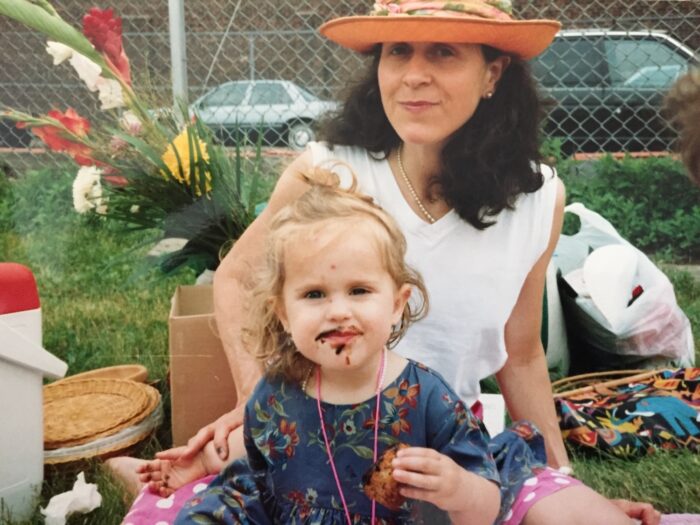
When I was still very young, around 4-5, we started branching out from macrobiotics, but I still had imposed dietary restrictions at any given time, like no dairy or white sugar.
As I started public school and sports in 5th grade after being homeschooled, I was constantly declining food offers – so much so that it became a knee jerk reaction, before I even knew what was being offered to me.
I was so used to saying no, when my body actually wanted to say yes.
As a kid, I just wanted to feel normal and relaxed around food.
This led to compulsive eating and overeating whenever I got the opportunity.
As my parents started taking a more relaxed approach to food, I had more options – but the imprints of restriction were still firmly rooted in my body, leading me to rebel and overeat.
I would get home from soccer practice and devour bread and olive oil before eating a full pasta bolognese dinner.
I would eat multiple desserts.
I would binge on granola, peanut butter, chocolate, and whatever else was in the lazy Susan as I sat in front of it, scared my mom or dad would come in.
My body was starving for comfort, for ease, but I just wound up feeling uncomfortable in my body.
Surprisingly, I was never overweight.
In fact, I was always relatively thin and athletic as a kid.
I started playing soccer at age 10, on two teams at the same time, then switched to year-round track and cross country when I was 15.
Around that same time, I started developing an eating disorder, quickly spiraling into a rollercoaster relationship with food.
Food became my opponent – something I was staunchly trying to avoid – or overconsuming.
In my early 20s I hit a breaking point: I was turning the corner onto 9th Street in the East Village in NYC, where I lived for many years, when I had a sobering realization:
It struck me all at once that if I continued my current relationship with food, I could get very sick, or worse.
Eating disorders create an incredibly stressful, acidic environment in the body, which can lead to all sorts of problems.
Where there’s stress and acidity, there’s inflammation.
Where there’s inflammation, anything from minor symptoms to serious illnesses can develop.
When this hit me, I realized that for me, the only way was intuitive eating.
I didn’t call it that at the time, I just knew I had to eat what I wanted with no restriction, BUT always listen closely to my body, and show myself deep reverence and love.
In that moment, I committed – not directly to intuitive eating – but to myself.
After years of struggling with food, I finally committed to honoring my body and my desire to eat without restriction or guilt, and I’ve upheld that commitment ever since.
This includes eating the foods that delight my taste buds AND skipping the foods that clearly do not work for my body – the foods that clearly trigger uncomfortable symptoms.
Later, I came to know this practice as intuitive eating, develop it further, and share it with clients in my coaching practice.
Intuitive eating is a dance of gentle yet grounded, clear listening and responding to your body in real time.
It’s a commitment to honor your body over any book or guru.
It’s a promise to your fullest vitality and freedom.
Today I’ve been recovered from my ED and an intuitive eater for over 10 years, since 2013.
That was the last time I engaged in any ED behavior, after I made that commitment to myself on 9th Street.
A lot of people think intuitive eating is a vague ethos, just “normal” eating, or just a cover for eating whatever you want.
It’s none of those things.
It’s a very practical process that includes physical and mental frameworks.
These are the practical steps I still take today to eat intuitively, after making the commitment to myself over 10 years ago.
Today the whole process happens much more quickly and effortlessly than when I was first starting out, but it’s still very much intact.
These steps keep me anchored in my body in a world that’s constantly trying to send me back to war with food and my body (never going).
A world that’s constantly trying to tell me my body or way of eating is wrong, so that I’ll buy another product or program or book.
Here’s how I eat intuitively, without restriction, and still feel great in my body…
1. Connect.
I don’t always eat the first thing that comes to mind.
I give myself at least a few minutes, breathe deeply, relax my body, and place my attention on my lower belly and womb space.
Connecting with myself in this way gives me a lot of information about what will taste best and feel best in my precious body.
Sometimes my food choice is ultimately the same as my first thought, after checking in – other times it’s very different.
I’ve gone from burger to sushi in a few minutes (lol).
Allowing space to feel into deeper layers of the body, outside the mind, allows your body to communicate with you.
When I was first starting out with intuitive eating, I would take more time and space for my food choices. Now it’s pretty quick and flowy.
2. Chew.
The majority of people do not chew their food enough – I was one of them for years.
Digestion doesn’t begin in the mouth, it begins in the mind and nervous system, but what goes on in the mouth is still crucial.
Chewing your food thoroughly, until it’s almost liquid, profoundly improves digestion.
It allows your mind to stay connected to your body, so your hunger and fullness signals are clearer.
If you’re just starting this journey, simply committing to chewing your food very thoroughly, without making any other changes, can shift your entire relationship with food.
The added time and space give you SO much information on how your body is responding to what you’re feeding it.
If you’re a mindful intuitive eating pro, bringing your focus back to chewing will always serve you – it’s so easy to get caught up in life and put chewing last.
3. Pause.
For years, I ate very fast, especially when I was binging.
I had so much shame wrapped up in eating that I wanted it to be over quickly.
When I worked in offices and restaurants, on average I took a 20-30 minute lunch break, if that.
More significant than the allotted time was the environment of rushing to get back to work.
Today, I eat very slowly.
I’m often the last one to finish my food (I used to be among the first).
Pausing between bites, along with chewing each bite very well, gives your body the time it needs to let you know how it’s feeling.
Slowing down my meals also makes the experience feel SO luxurious and pleasurable, which is key to digestion and metabolism.
When you eat quickly, your body might enter a stressed state – fight-or-flight.
Slowing down sends your body the signal that you’re safe, which allows your nervous system to enter the parasympathetic, rest-and-digest state.
Pausing between bites and eating slowly has been absolutely key to my healing.
4. Breathe.
Eating fast doesn’t leave a lot of room for breathing during meals.
Along with food and water, the body runs on oxygen, and both are key for digestion and nervous system regulation.
Making a conscious choice to take intentional breaths throughout my meals has been key to healing from my ED and completely changing my relationship with food.
Placing focus on the breath helps regulate the nervous system, putting you into the parasympathetic state, where food can digest more easily…
… versus the sympathetic, fight-or-flight state, where digestion is put on pause.
Breathing also helps you slow down during meals, which supports chewing well and pausing between bites.
All these steps work together, and over time, they feel cohesive and effortless.
5. Practice.
Having regular mind-body practices can radically change your relationship with food and your body.
Recently, dance has been the most impactful for me.
Dance puts me in touch with my body like nothing else, allowing me to pick up more internal signals than ever before.
I take dance classes at least a few times a week, and they change everything – how I feel, how I move through the world, and how I nourish myself.
My other current mind-body practices include vinyasa yoga, kundalini breathwork, meditation, yoga nidra, massages, chiropractic, and biking.
Our bodies need movement – they were literally designed for it.
When we’re too stagnant OR too active (think HIIT, heavy lifting, and long road runs) for too long, we start to feel numb and disconnected from our intuition.
Moving in a way that’s mindful and loving will deeply support your intuitive eating journey.
I am so incredibly grateful for my relationship with food today.
It did not come naturally, because I didn’t have the opportunity as a child to naturally engage with all types of food and observe how they affect me with no bias.
A diet was imposed on me – with the best intentions – but still, it led me to rebel, as most humans would.
I believe that if children are given free rein with food they’ll naturally choose what’s best for them, developing a solid relationship with food before they understand the barrage of wellness messaging being thrown at them.
I’m so thankful I’ve been able to pull myself off the food rollercoaster and develop a rock-solid relationship with food.
Today, food is my rock.
My relationship with my body is my rock.
How I talk to myself is my rock.
When the world feels crazy, I always have that.
To go from food and body image being THE single most chaotic thing in my life to one of the most stable things, is truly a gift I’ve given myself.
What’s your relationship with food today?
Does it feel easy, hard, or somewhere in-between?
How would you like it to feel?
I’m envisioning that for you, and I know it’s possible for you.
Much love,
Lula